

You pride yourself on being accessible.
You don’t want guessing.
You don’t want mistakes.
So you keep an open door.
It feels supportive.
But if your team keeps asking you questions all day, that open door may be the reason you’re still working nights and weekends.
Not because your team is incapable.
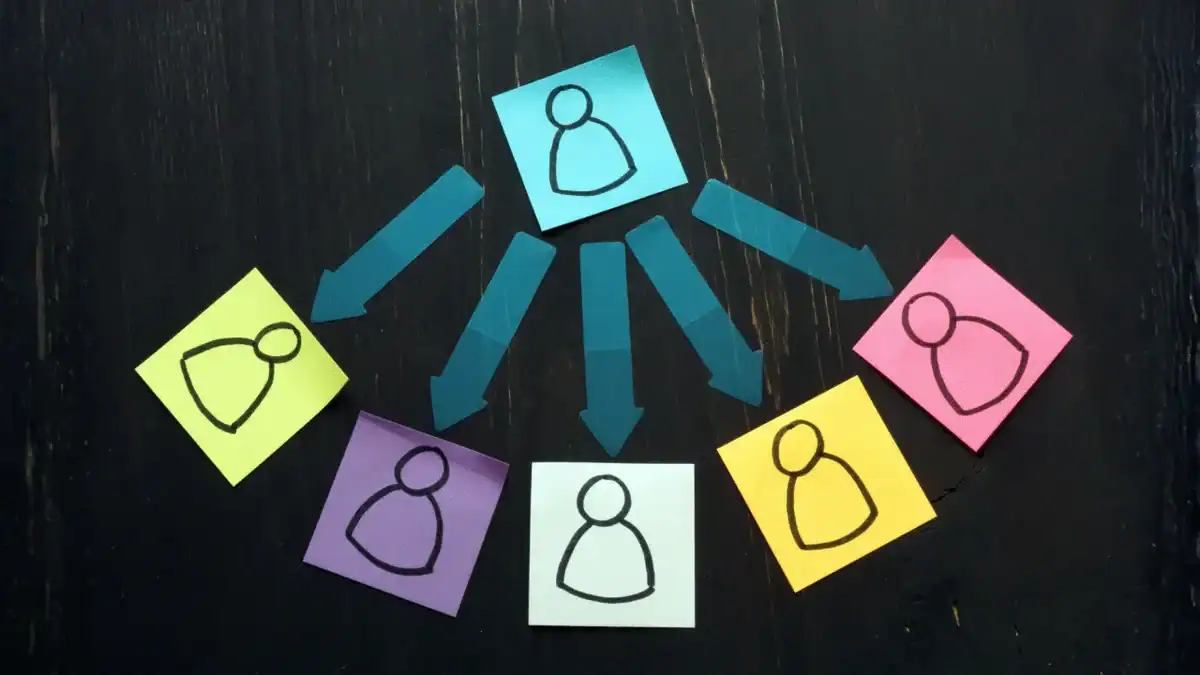
Because you are still the decision funnel.
You’re Not Losing Minutes. You’re Losing Focus.
You block two hours to work on next quarter’s plan.
Ten minutes in:
“Quick question.”
You answer.
Back to the document.
“Is this what you meant?”
You answer.
“Can you take a look at this?”
By 4:00 p.m., you’ve touched the plan three times and finished none of it.
Nothing was urgent.
Nothing was dramatic.
But here’s what you’re underestimating.
Research from the University of California, Irvine found that after an interruption, it takes an average of 23 minutes and 15 seconds to fully regain focus.
Not a few seconds.
Twenty-three minutes.
So when you answer 15 quick questions in a day, you’re not losing 15 minutes.
You’re losing hours of usable thinking time.
That’s why you end the day wondering how you were busy the entire time and still didn’t touch the work that actually moves the business forward.
You Delegated the Task. Not the Decision.
Dana runs an accounting and bookkeeping firm with seven team members.
Smart people. Experienced. Trusted.
She told me, “I don’t understand why I’m still in the weeds. I have a team.”
On paper, she was delegating.
In practice, she was answering up to 30 clarifying questions a day.
Not emergencies.
Gray areas.
She checked Slack before brushing her teeth.
She reopened the same client file three times in one afternoon.
She blocked two hours for planning and never made it past the first 20 minutes.
She had delegated the work.
She had not defined who owns the decisions.
So every time her team hit uncertainty, they routed it back to her.
When your team keeps asking you questions, it usually isn’t about capability.
It’s about ownership.
You delegated the task.
You didn’t define who owns the decisions.
So anytime someone is slightly confused, they ask you.
And your open door quietly turns into a decision funnel.
Not because you want it to.
Because no one drew the boundary.
The Real Cost of an Open Door Policy
That’s why you feel overloaded.
Not because of volume.
Because you’re still the decision-maker for routine issues.
By Thursday afternoon:
• The work only you can do is untouched.
• You’re reviewing work you already assigned.
• You’re finishing strategy after dinner.
• Slack stays open long after you meant to log off.
On paper, everything looks fine.
You have a team.
You are delegating.
Revenue is steady.
But if your team keeps asking you questions about routine decisions, you’re still carrying ownership that should no longer be yours.
If nothing changes, you’ll still be answering those same questions in June.
Closing the door is not the solution.
You do not need to become unavailable.
You need to define ownership clearly at the moment you hand something off.
Who decides what.
What requires your input.
What does not.
Dana did not reduce her accessibility.
She clarified decision ownership.
Within three weeks, the daily interruptions dropped significantly.
Not because her team changed.
Because the structure did.
If this feels like your week, I’m teaching a free workshop on March 11:
Stop Answering Questions All Day
3 Delegation Mistakes That Keep You Working Nights and Weekends
We’ll walk through:
• Why your team keeps asking you questions even after you delegate
• The structural mistakes that keep decisions routing back to you
• How to define ownership before your next handoff
By the end, you’ll know exactly what needs to change.
If you have 2 to 10 team members and are still the final decision-maker on routine issues, this is fixable.
March 11.
Let’s make your next handoff cleaner than the last one.

*Image created in Canva






Leave A Comment